
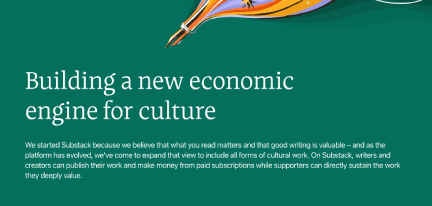
Among several email marketing platforms, Substack is emerging as a viable platform to create both paid and free newsletters. In the past few months, there has been an “epic migration” of creators to Substack. Some names might sound familiar: Justin Welsh (the Saturday Solopreneur), Ali Abdaal (YouTuber with 6.3M subscribers), Jay Clouse (Creator Science), as well as an increasing number of journalists and even politicians.
A newsletter (whether paid or free) is a powerful tool to grow your business. It builds credibility, connects you with like-minded peers, and keeps you top of mind with potential clients.
The question is, is Substack a good choice for solopreneurs, especially those in a service business? Like any other platform, Substack has its pros and cons. In their Growth in Reverse podcast, Chenell Basilio and Dylan Redekop discuss the reasons for the migration.
What is Substack?
Substack started as a newsletter platform and has also become a podcasting and video platform. It also has social media capabilities such as:
Notes: Short posts (like tweets) that followers can like, comment on, and share.
Reposts: Users can repost others’ content or reply publicly, similar to quote-tweeting or commenting.
Allows followers: People can follow writers without getting emails, making it easy to connect and keep up with their posts.
News feed: Readers see a scrolling feed of posts from writers they follow.
Engagement: Readers can comment and like on posts.
Recommendation Network: Writers can recommend others, making it easier for readers to discover new voices. This mimics how algorithms suggest content on social media.
Reasons for the “mass” migration
Given the dwindling reach of social media platforms, Substack is being seen as an alternative to gain traffic. For instance, its Recommendation Network, serves as an organic way to promote a publisher without the stress of social media posting.
Substack has also made a huge effort to attract creators with huge audiences to the platform. It has set up a Creator Fund, which provides a financial incentive to such creators.
Advantages of Substack
- No more need to use other social media platforms.
- Great brand recognition. When the word “Substack” is mentioned, it’s instantly understood that you are a publisher or content creator.
- Ease of use, which makes it easy for readers to subscribe. Publishers can also set up an account in 30 minutes. This is a great advantage for those who are paralyzed by too much choice.
Potential Drawbacks of Using Substack
- Substack is venture capital funded, so its first responsibility is to its shareholders and investors. Which means it is under pressure to turn a profit, and their primary goal is growth and revenue. Their publishers would come second in the list of priorities.
- Substack charges a 10% fee of whatever a publisher earns. Small publishers need to decide if this cost is worth the exposure.
- Substack has total control over a publisher’s account and subscribers. Chenell and Dylan cite a case where Substack has locked a prominent creator out of her account because she did not follow their terms of use.
- There is also that danger that if Substack were to shut down, it could take down a publisher’s entire business.
- For busy solopreneurs, being able to send automated emails is a factor in subscriber growth. Unfortunately, Substack does not allow emails to be customized. Publishers can set up welcome and expiration emails only.
- As Substack grows, visibility may decline. Like other crowded platforms, it risks becoming saturated, leading to another migration in future.
- Substack is great for building a free list, but not for making money. According to Lex Roman of Journalists Pay Themselves, some writers report conversion rates as low as 2–5%. With such an easy signup process, it’s no surprise that the platform may attract readers who aren’t deeply invested.
How to protect your business
Chenell advises publishers to:
- Export your email lists weekly, and also export your data and content regularly.
- Use Substack to build an audience, and then migrate it to another platform over which you have more control.
- Continue to repurpose content to other platforms.
- Realize that you, and not Substack, are responsible for getting traffic to your page.
If you need more information:
Lex Roman (Journalists Pay Themselves) shares her theories for why Substack’s conversion rates are so low. It’s worth checking out here.